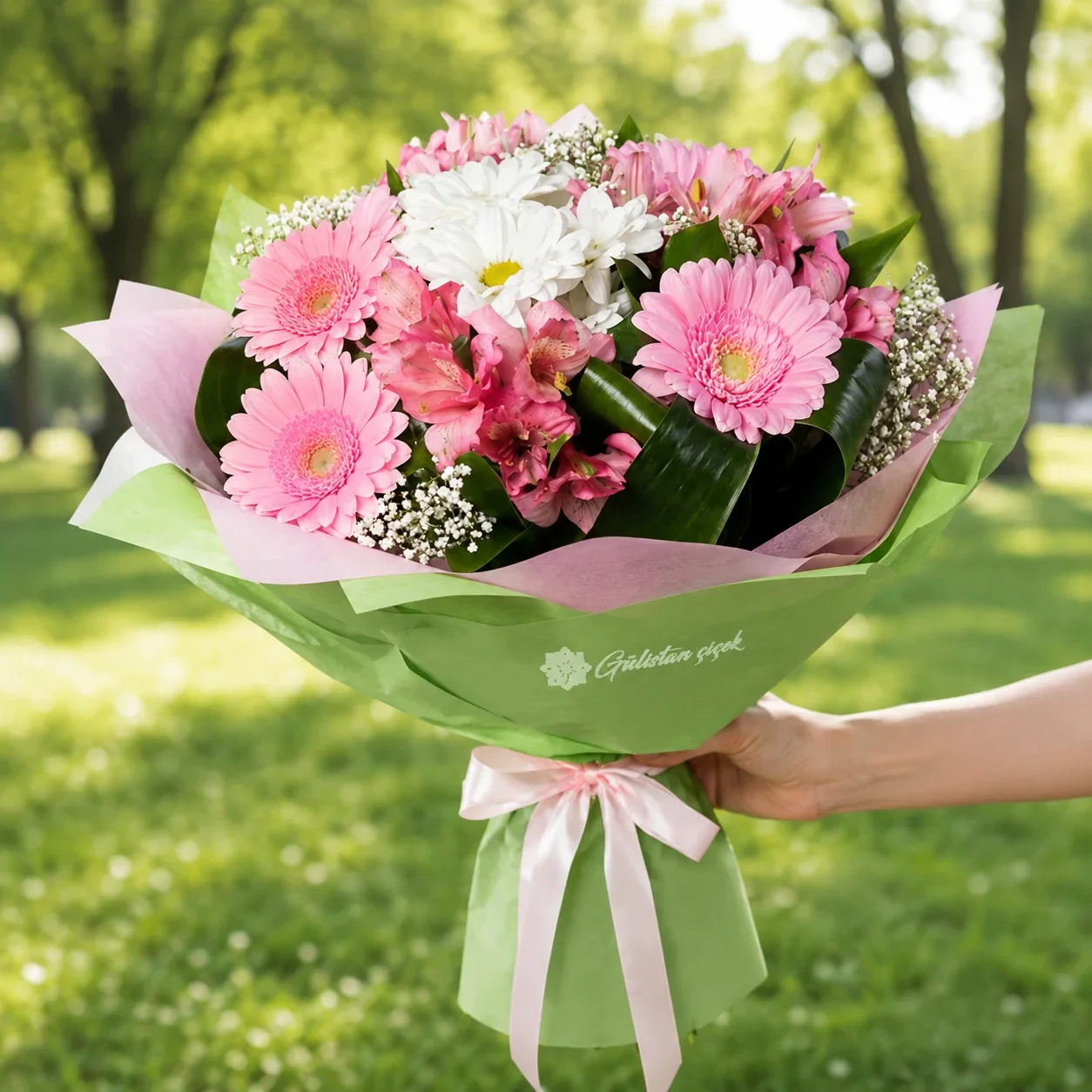
Mixed Seasonal Bouquet: Where Daisies Meet Gerberas
After thirty years behind the flower counter, I can tell you that arrangements like the Mixed Seasonal Bouquet are among my favorite pieces to put together. This bouquet is created using daisies, gerberas, and whatever fresh seasonal blooms are at their best that week, which means every bouquet is a little different but always cheerful and full of life. The clean simplicity of the daisy paired with the bold, sunlike colors of the gerbera creates a genuinely uplifting arrangement. We typically deliver this as a hand-tied bouquet in clear wrap, or arranged in a vase upon request.
General Characteristics and Origins
Daisies (from the Chrysanthemum family) and gerberas (Gerbera jamesonii) both belong to the Asteraceae family. Gerbera actually originated in South Africa and was brought to Europe in the 19th century, eventually becoming one of the most beloved cut flowers worldwide. Daisies, on the other hand, grow across nearly every continent and are known for their understated charm. Both flowers are prized in bouquet work for their sturdiness and vivid color range.
Light and Placement
Once this bouquet arrives home, place it in a bright spot away from direct sunlight. If you set it near a window, avoid the harsh midday sun, since direct rays will fade the petals quickly and scorch the leaf edges.
Temperature and Humidity
Gerberas and daisies both prefer cooler conditions. Room temperature between 18-22 degrees Celsius is ideal, and you should keep the arrangement well away from radiators, air conditioning vents, or stovetops. Also avoid placing it near a fruit bowl, since ripening fruit releases ethylene gas that shortens a flower's lifespan.
Watering and Vase Care
Change the vase water every two days without fail, as gerbera stems are especially prone to rotting in stagnant water, so keeping it clean is essential. Re-cut the stems at an angle with every water change to keep water uptake efficient.
- Cut stems at a 45-degree angle with a sharp knife, ideally under running water
- Wash and rinse the vase thoroughly each time to eliminate lingering bacteria
- Always add the flower food packet your florist gave you
- Keep the water level slightly lower for gerberas, since the base of the stem is soft and prone to softening in deep water
- Remove any wilted leaves or blooms promptly
Trimming and Post-Bloom Care
When the bouquet arrives, strip away any lower leaves that would sit below the waterline, since decaying leaves breed bacteria and shorten the life of the whole arrangement. Removing individual flowers as they fade helps the rest of the bouquet stay fresher for longer.
Gift Meaning
A mixed seasonal bouquet carries a message of warmth, sincerity, and cheer. Gerberas in particular symbolize happiness and positive energy, while daisies represent purity and loyal affection. It is a heartfelt choice for birthdays, get-well visits, or simply letting someone know you are thinking of them.
Common Mistakes
The mistake I see most often is placing the bouquet next to a heater or in direct sun. Another common issue is forgetting to change the vase water, which clouds quickly and blocks the stems from drawing up moisture. Lastly, submerging gerbera stems too deeply can cause the stem base to rot, so keep the water level moderate.

Florist with 30 years of experience. Lives in the Antalya region and shares practical flower-care knowledge.