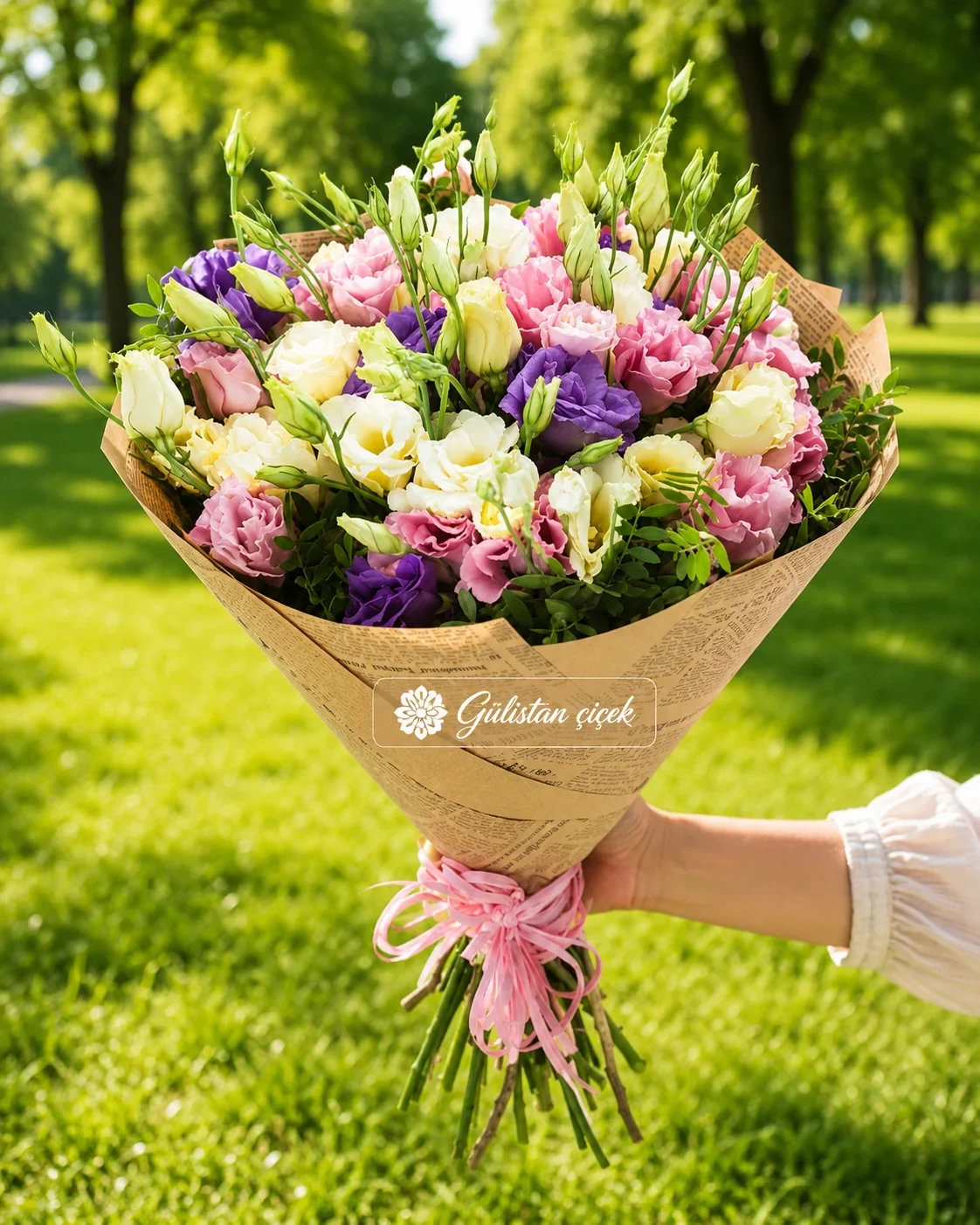
Mixed Lisianthus Bouquet: The Rose's Elegant, Yet Entirely Different Cousin
After thirty years behind the counter, I can tell you the Mixed Lisianthus Bouquet is one of those arrangements people fall in love with the moment they see it. This bouquet brings together lisianthus blooms in varied colors, gathered in a natural, generously full hand-tied style rather than a stiff formal shape. Unlike roses, lisianthus petals are thin, ruffled and almost paper-like, which means the flower asks for a slightly gentler kind of care, and rewards you generously when you give it.
General Character and Origin
Lisianthus, botanically Eustoma grandiflorum, actually originates from the prairies of the southern United States and Mexico, though it is often nicknamed the Turkish Rose because its layered, ruffled blooms resemble roses at first glance. Each stem typically carries several buds at different stages, so as one flower fades, another opens, giving the whole bouquet a rolling, ever-renewing freshness over its lifespan.
Light and Placement
Keep your Mixed Lisianthus Bouquet somewhere bright but out of direct sunlight. A spot near a window works beautifully as long as harsh midday sun does not fall directly on the petals, since the thin petal structure dries out and fades quickly under strong direct light.
Temperature and Humidity
Lisianthus genuinely prefers cool rooms, ideally between 18 and 22 degrees Celsius. Keep the vase well away from radiators, direct heating vents, and kitchen stoves, since sudden temperature swings shock the stems. The flower is not particularly demanding about humidity, but very dry indoor air can cause the petal edges to crisp early.
Tips to Extend Vase Life
A handful of small habits, learned over decades in the shop, can genuinely double how long this bouquet stays fresh:
- As soon as you unwrap it, trim the stems on a diagonal angle by about two to three centimeters
- Strip away any leaves that would sit below the waterline, since submerged foliage rots and breeds bacteria
- Replace the vase water completely every two days, re-cutting the stems each time you do
- Always dissolve the included flower food sachet into the water, it makes a genuine difference for lisianthus
- Keep the vase away from a fruit bowl, since ripening fruit releases ethylene gas that speeds up wilting
Deadheading and After-Bloom Care
Once an open bloom starts to fade, gently pinch it off rather than leaving it on the stem. This redirects the plant's remaining energy toward the buds still waiting to open, keeping the arrangement looking full and alive for longer. I also recommend removing any yellowing or browning leaves the moment you notice them, both for appearance and to keep the water cleaner.
Meaning as a Gift
In the language of flowers, lisianthus represents gratitude, unspoken affection and heartfelt appreciation. A mixed-color bouquet like this one is particularly well suited to expressing a whole range of warm feelings at once, making it a thoughtful choice for birthdays, thank-you gestures, or simply letting someone know you were thinking of them.
Common Mistakes to Avoid
The mistake I see most often is people forgetting to change the water for days at a time. Lisianthus stems drink more water than most people expect, and once the vase runs low the blooms droop almost immediately. Another common error is placing the bouquet right next to a television or other electronics that radiate heat, which quietly shortens its life without anyone realizing why.

Florist with 30 years of experience. Lives in the Antalya region and shares practical flower-care knowledge.