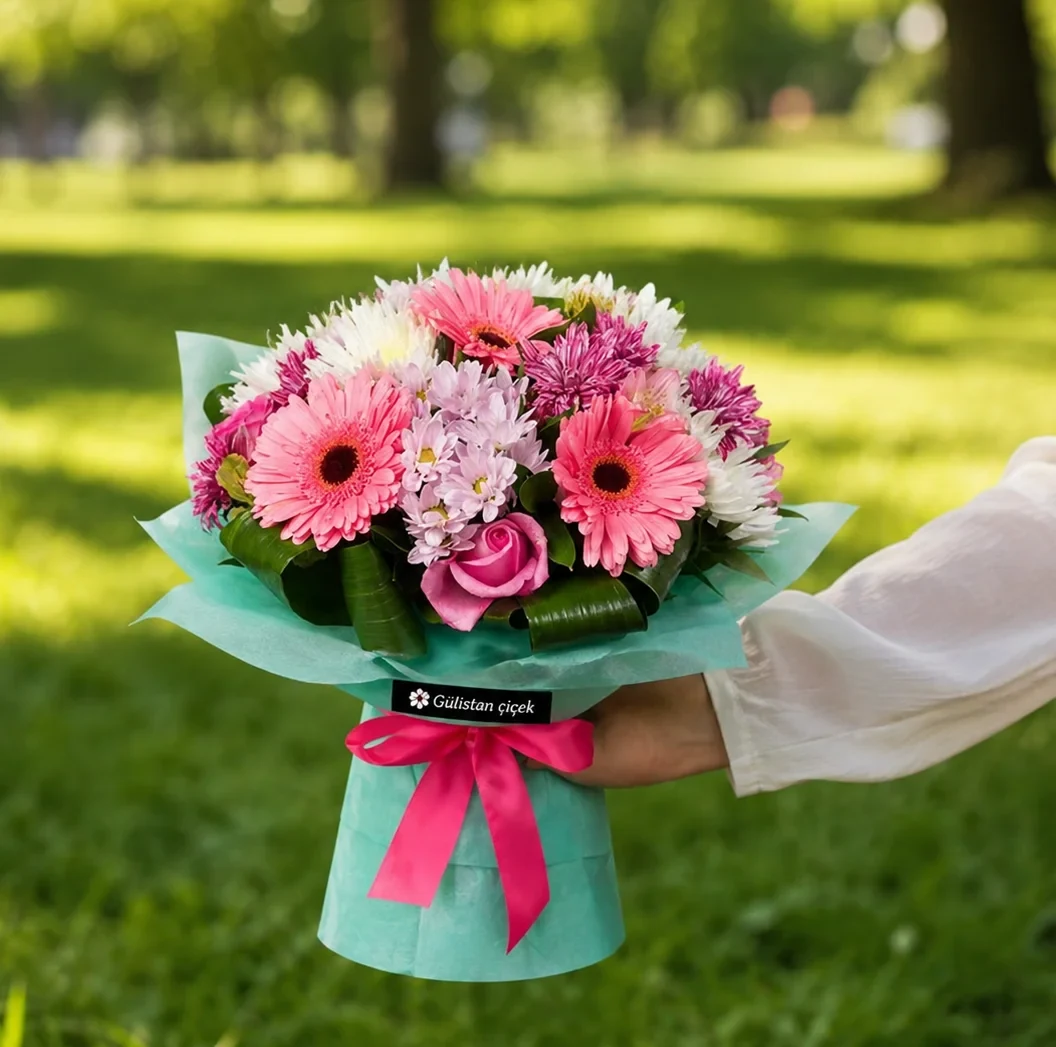
Chrysanthemum Meets Gerbera: A Cheerful Bouquet Story
After thirty years arranging flowers here in Antalya, I can tell you the Chrysanthemum and Gerbera Bouquet is one of the pieces that makes customers smile the widest when they pick it up. The dense, layered heads of chrysanthemum paired with the sunny, open face of gerbera create a bouquet that feels both cheerful and substantial. This particular arrangement usually arrives as freshly cut stems wrapped in cellophane or kraft paper, though many customers also ask for it already arranged in a vase.
General Character and Origin
Chrysanthemum originates from East Asia, where for thousands of years it has symbolized long life and joy in Chinese and Japanese culture. Gerbera, on the other hand, comes from Southern Africa and belongs to the daisy family, though its blooms are much larger and more vividly colored than a common daisy. Together they create a lovely contrast in both texture and color, which is why I recommend this combination for birthdays, get-well wishes, or simply to brighten someone's day.
Light and Placement
Once this bouquet reaches your home, keep it in a bright spot that avoids direct sunlight. A windowsill looks lovely but midday sun will wilt the petals and leaves surprisingly fast. A living room corner or dining table with soft, indirect daylight works best throughout the day.
Temperature and Humidity
Both flowers prefer cooler conditions, ideally between 18 and 22 degrees Celsius. Keep the bouquet away from radiators, stove heat, or direct airflow from air conditioning units. If the air in your home is very dry, a light mist on the foliage — not directly on the gerbera petals — helps keep everything looking fresh longer.
Tips to Extend Vase Life
With proper care, this bouquet easily stays fresh for seven to ten days. These small habits, learned over decades behind the counter, make a real difference.
- Cut the stems at a 45 degree angle with sharp scissors to increase the water absorption surface
- Change the vase water every two days and rinse the vase thoroughly each time
- Mix in the flower food sachet provided by your florist to slow bacterial growth
- Keep only about five to six centimeters of water in the vase since gerbera stems are prone to rot in deeper water
- Remove wilted leaves and fallen petals as soon as you notice them
Trimming and Post Bloom Care
Each time you change the water, trim about half a centimeter off the stem ends to open up clogged tissue and help water travel up more easily. Gerbera stems are hollow and can sometimes struggle to stay upright, so slipping a thin floral wire alongside the stem can help. Chrysanthemum stems are much sturdier and rarely need this extra support.
Gift Meaning
Chrysanthemum carries meanings of loyalty and honest affection in many cultures, while gerbera is widely associated with cheerfulness, innocence, and pure joy. Together, this bouquet sends a warm message perfect for close friendships, celebrations, or simply telling someone you are thinking of them with color and energy.
Common Mistakes to Avoid
The most frequent mistake I see is placing the bouquet near a fruit bowl. Ripening fruit releases ethylene gas, which noticeably shortens a flower's lifespan. Another common error is never changing the vase water, which lets bacteria build up and clog the stems. Finally, avoid drafty spots near air conditioning vents or open windows, and your flowers will reward you by staying fresh much longer.

Florist with 30 years of experience. Lives in the Antalya region and shares practical flower-care knowledge.