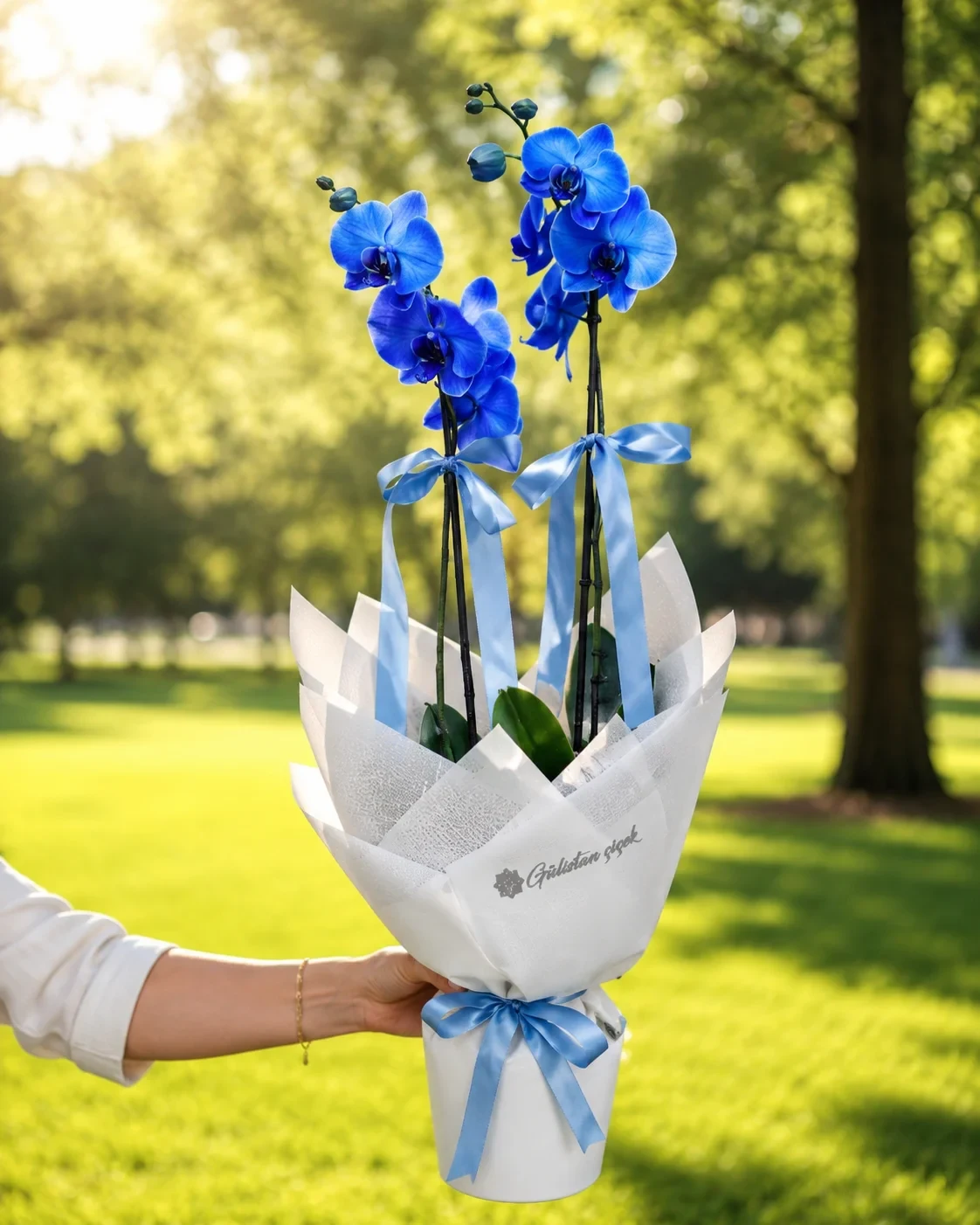
Blue Orchid: Where Elegance Meets Tranquil Beauty
As someone who has worked with flowers in Antalya for thirty years, I can tell you the Blue Orchid never goes unnoticed once it enters our display. True blue does not occur naturally in orchids; this captivating shade is achieved by carefully dyeing white Phalaenopsis blooms. We usually prepare this piece as a single or double stem in an elegant pot, sometimes arranged in a refined box. The presentation can vary by request, but the elegance always stays the same.
General Characteristics and Origin
This orchid belongs to the Phalaenopsis family, native to the tropical rainforests of Southeast Asia. It is often called the moth orchid because its blooms resemble butterflies fluttering in the air. Since the blue color is applied afterward, the roots and foliage remain completely natural, with only the flowers being colored.
Light and Placement
Orchids dislike direct sunlight, which can scorch their leaves. The ideal spot is near an east or west facing window where light is filtered through a sheer curtain. Too dark a corner will make flowering difficult, so aim for a bright yet shaded location.
Temperature and Humidity Needs
The ideal temperature range is between 18 and 24 degrees Celsius, and the plant should be kept away from sudden temperature swings and air conditioning drafts. Since orchids love humidity, misting the leaves lightly helps in dry indoor air, but avoid spraying water directly on the flowers as it can cause spotting.
Watering Habits
The most common mistake I see is overwatering. I always tell my customers: press your finger into the bark mix, and if it feels moist, skip watering. Once a week, watering until water drains from the bottom holes is usually enough. Root rot is the orchid's greatest enemy, and it almost always stems from excess water.
Tips to Extend Vase and Pot Life
A few simple habits make a real difference in how long both the blooms and the plant itself stay vibrant and healthy.
- Keep the pot away from direct sun and heating devices
- Never let water pool at the bottom of the pot after watering
- Use a diluted orchid fertilizer once a month
- Trim faded blooms with clean scissors so the plant redirects energy to new growth
- Provide a humid environment with good air circulation
Pruning and Post Bloom Care
Once all flowers have fallen, do not cut the stem all the way down; instead, cut just above a node, as a new flower spike can sometimes emerge from that point. If the leaves start yellowing, this is usually a sign of overwatering, so reduce your watering frequency.
Gift Meaning
Blue symbolizes peace, calm, and a rare kind of affection. The Blue Orchid is a perfect choice for anyone seeking a memorable, attention grabbing gift beyond the ordinary. It is a popular pick for special occasions, new home openings, or business launches.
Common Mistakes
The mistake I see most often is customers assuming the orchid sits in regular potting soil and watering it like typical flowers. Orchids grow in a special bark mix that needs airflow, so avoid frequent watering and never let the roots suffocate.

Florist with 30 years of experience. Lives in the Antalya region and shares practical flower-care knowledge.