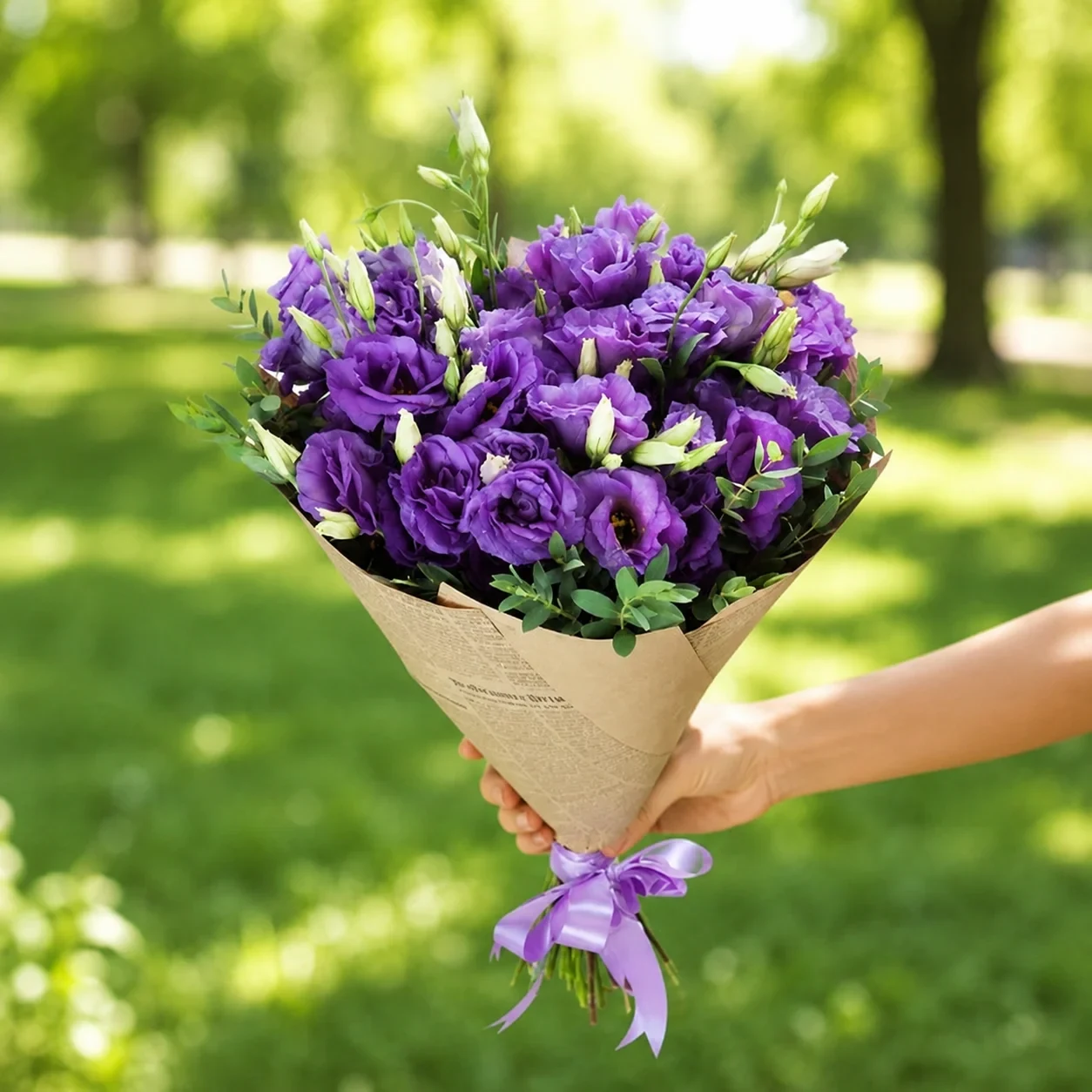
21 Purple Lisianthus Bouquet: Where Elegance Meets Quiet Grandeur
After thirty years behind the counter, lisianthus is still one of the flowers that stops me in my tracks every time a fresh shipment arrives. The 21 Purple Lisianthus Bouquet takes a flower that already feels luxurious as a single stem and multiplies that grace into a truly striking presentation. With its ruffled, rose-like petals, silky texture, and buds that keep opening gradually over days, this bouquet rewards patience and attention. Presented as a hand-tied bouquet, the rich purple tone gives it both an intimate warmth and a sense of occasion, making it as fitting for a quiet gesture as for a grand celebration.
General Characteristics and Origin
Lisianthus, botanically known as Eustoma, actually originates from the prairies of North and Central America, though decades of cultivation have refined it into what many now call a rose-tulip hybrid look-alike. The double-petaled varieties resemble garden roses but without thorns, and their petals are noticeably thinner and more delicate. Purple lisianthus in particular carries a mood of sophistication and calm dignity that few flowers achieve so effortlessly.
Light and Placement
I always tell customers to keep this bouquet in a bright spot that avoids direct sunlight. A windowsill is fine only if there is a sheer curtain filtering the light; direct sun will fade the purple color and wilt the petals within a day or two. Keep it away from drafts and doorways as well, since fluctuating air currents shorten the vase life considerably.
Temperature and Humidity
Lisianthus thrives in cooler conditions, ideally between 18 and 22 degrees Celsius. Avoid placing it near radiators, stoves, or air conditioning vents where temperature swings are frequent. The air should not be too dry either, as overly arid rooms cause the petals to curl and drop prematurely.
Tips to Extend Vase Life
These are the same simple rules I share with every customer at the counter, and following them can easily keep the bouquet fresh for up to two weeks.
- Change the vase water every two days and rinse the vase thoroughly each time.
- Cut the stems at an angle, which increases water absorption and slows bacterial buildup.
- Always dissolve the provided flower food in the water to support bud opening.
- Strip any leaves that would sit below the waterline, as submerged foliage speeds up bacterial growth.
- Keep the vase away from fruit bowls, since ripening fruit releases ethylene gas that accelerates aging.
Trimming and Post-Bloom Care
Every time you change the water, trim about one centimeter off the stem ends. This reopens the water channels that naturally seal over and helps the flower drink more efficiently. Remove any wilted or yellowing buds as soon as you notice them, since they can draw nutrients away from the still-blooming ones.
Gift Meaning and the Message of Purple
Purple lisianthus symbolizes elegance, admiration, and heartfelt appreciation. Choosing 21 stems carries its own significance, often associated with lasting devotion or a sincere expression of respect. It makes a wonderful choice for anniversaries, promotions, or simply telling someone how much they matter.
Common Mistakes to Avoid
The most frequent mistake I see is leaving the same water in the vase for days without changing it. Another is placing the bouquet right next to a stove or oven where heat is constant. Finally, cutting the stems straight across rather than at an angle reduces water uptake, so always favor an angled cut.

Florist with 30 years of experience. Lives in the Antalya region and shares practical flower-care knowledge.