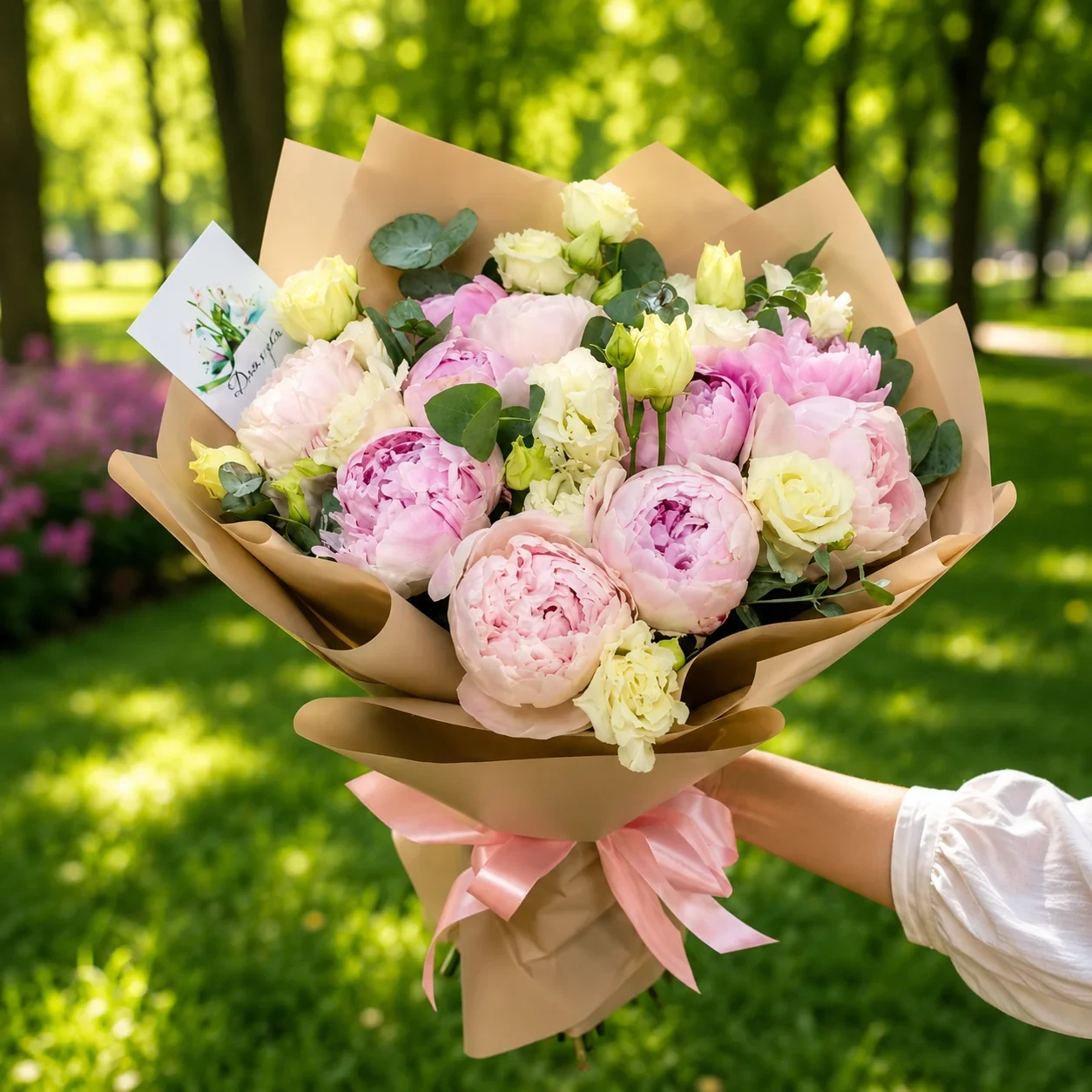
11 Pink Peonies and Lisianthus: Where Elegance Meets Romance
After thirty years of working with peonies in my flower shop, I can say without hesitation that pink peonies remain one of the most captivating blooms in the trade. This particular arrangement, 11 Pink Peonies and Lisianthus, pairs the peony's lush, velvety blooms with the delicate, rose-like flowers of lisianthus. We typically prepare this as a carefully hand-tied bouquet or arrange it in an elegant vase, and it is a favorite for both bridal bouquets and special-occasion gifts. Combining these two flowers creates a beautiful balance of texture and color, the peony's dramatic fullness softened by the lisianthus's graceful simplicity.
Origins and General Characteristics
The peony belongs to the genus Paeonia, with a history stretching back thousands of years. It was cultivated in Chinese imperial gardens for centuries and later found its way into gardens across the world, including Ottoman courts. Known for its layered, silky petals and rich fragrance, the peony is a true showstopper. Lisianthus, a more modern cut flower, brings a lighter, rose-like elegance that complements without competing.
Light and Placement
When displaying this bouquet at home, choose a spot with bright but indirect light, away from direct sun. Direct sunlight will quickly fade both the peony and lisianthus petals and shorten their lifespan considerably. A side table or console away from the window, but still in a well-lit room, works best.
Temperature and Humidity
Peonies and lisianthus both last much longer in cooler environments. Try to keep the room temperature between 18-22 degrees Celsius. Avoid placing the arrangement near radiators, fireplaces, or air conditioning vents, as warm air currents accelerate water loss and cause premature wilting.
Watering and Vase Care
Change the vase water every two days without fail. Trim the stems at an angle each time you change the water, since a flat cut reduces water absorption. Peony stems are thick and benefit from generous water levels, while the more delicate lisianthus stems prefer moderate water depth.
- Wash the vase thoroughly with soap between water changes to prevent bacterial growth
- Add a few drops of bleach or a commercial flower food packet to the water
- Strip any leaves that would sit below the waterline
- If peonies arrive as tight buds, keep them somewhere cool to let them open gradually
- Keep the arrangement away from ripening fruit, which releases ethylene gas and speeds up wilting
Pruning and Post-Bloom Care
As outer peony petals begin to wilt, gently remove that individual bloom so the rest of the arrangement can thrive longer. Lisianthus is remarkably resilient; trimming spent blooms encourages new buds along the stem to open. With this kind of attention, the whole arrangement can easily last two to three weeks.
Meaning and Gifting Ideas
Pink peonies symbolize love, affection, and happiness, while lisianthus represents gratitude and appreciation. This combination makes a deeply meaningful gift for anniversaries, birthdays, thank-you gestures, or simply an expression of love. In my shop, we take special care to let the soft pink tones of both flowers complement one another.
Common Mistakes to Avoid
The most common mistake I see is leaving flowers in their delivery wrapping when placing them straight into the vase, instead of trimming fresh stems and fully unwrapping them first. Another frequent error is neglecting to change the vase water; once it clouds, bacteria multiply rapidly and can wilt the flowers within hours rather than days.

Florist with 30 years of experience. Lives in the Antalya region and shares practical flower-care knowledge.